

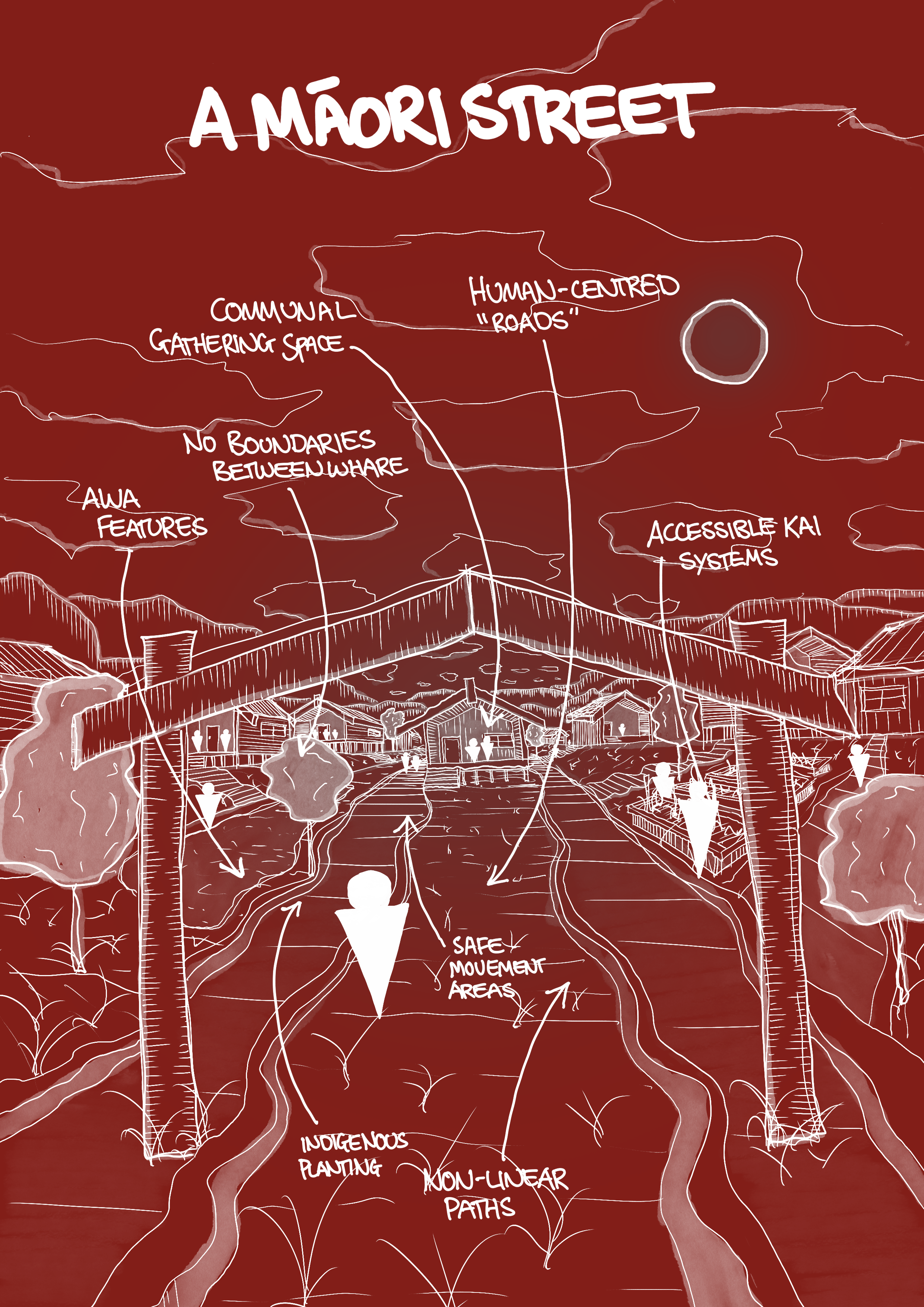
(RE)DESIGNING MĀORI STREETS
A Māori-led street design project exploring how streets in urban Aotearoa can better support wellbeing, cultural identity, movement, te taiao, and Māori authority.
(Re)designing Māori Streets responds to the need for street environments in Aotearoa that better reflect Māori realities, aspirations, and relationships to place. Streets shape how people move, gather, feel safe, connect with others, and participate in everyday life. However, many contemporary street environments have been shaped through planning frameworks that prioritise standardised movement, efficiency, and control, while limiting Māori authority, cultural expression, and ecological relationships.
This project brings together Māori-relevant literature, a national Māori Streets Survey, and Māori-led design wānanga to explore what Māori communities prioritise in street design and how Māori-led streetscapes might be realised in practice. Across the research, participants identified safety, walkability, access to nature, visible Māori identity, social connection, and meaningful Māori participation in decision-making as key priorities.
The project shifts the conversation from streets as technical infrastructure to streets as relational environments.
Through survey responses, kōrero, drawing, and collective design thinking, participants imagined streets that restore relationships with whenua and te taiao, support tamariki, pakeke, and kaumātua, make Māori identity visible in everyday urban life, and reduce the dominance of vehicles in favour of safe, people-centred movement.
The resulting white paper identifies priority outcomes, design principles, pathways for change, and recommendations for government agencies, local authorities, mana whenua, Māori communities, designers, planners, and delivery partners. These include Māori-led governance, sustained funding for Māori capability and leadership, pilot projects, place- and taiao-led design guidance, and evaluation frameworks that measure wellbeing, cultural vitality, environmental health, and community use.
While centred on Māori worldviews and leadership, the project also points to wider benefits for inclusive, equitable, and resilient urban environments. It positions streets as places where cultural presence, ecological care, whānau connection, and spatial justice can be made visible and lived.
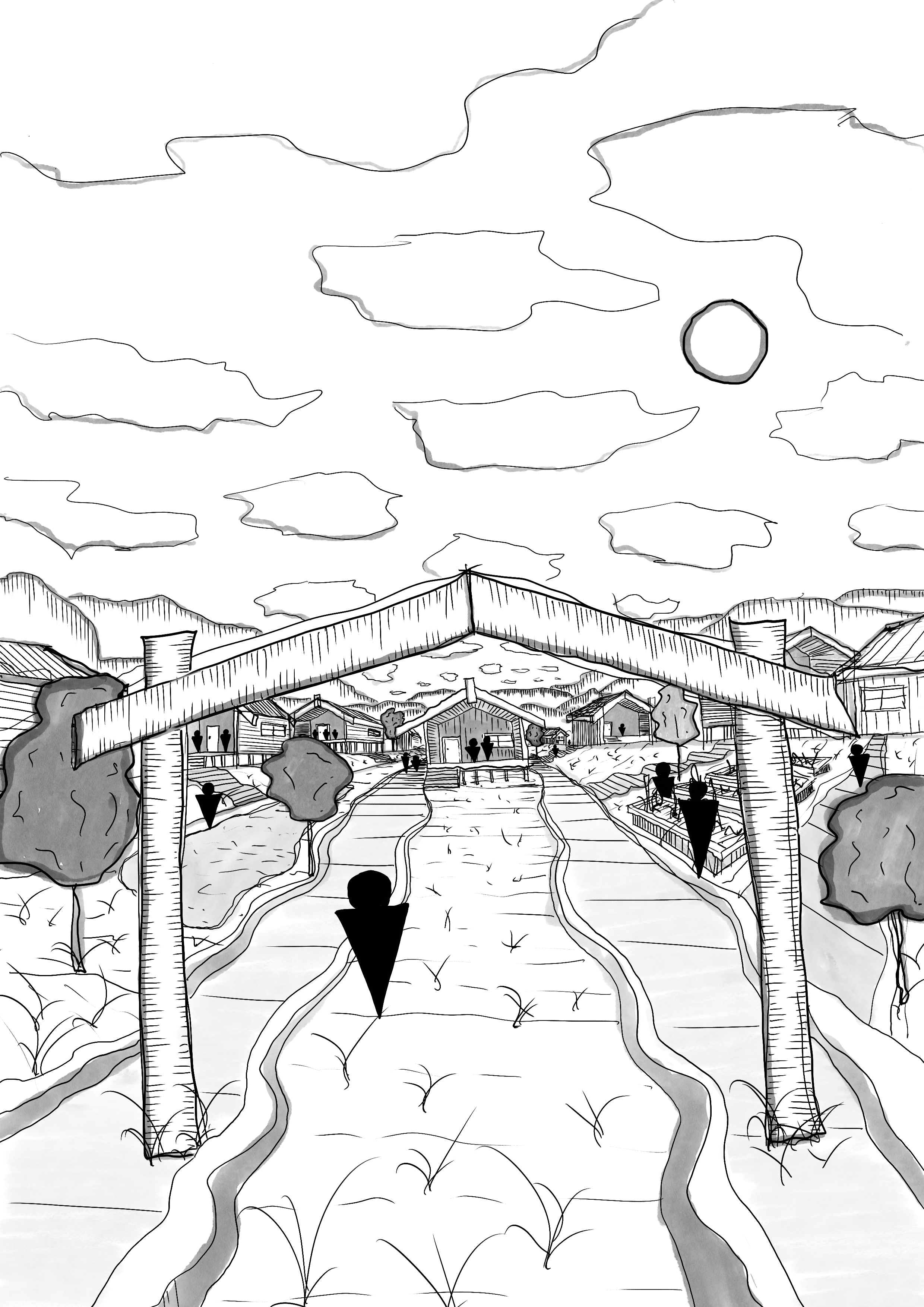
PROJECT DETAILS
KAUPAPA:
(Re)designing Māori Streets explores how streets in urban Aotearoa can better reflect Māori values, identity, authority, and relationships to whenua and te taiao. The project brings together Māori-relevant literature, a national Māori Streets Survey, and Māori-led design wānanga to identify priorities, principles, and pathways for streets that support wellbeing, cultural presence, ecological care, and Māori leadership.
TITLE:
(Re)designing Māori Streets.
LEAD:
Rebecca Kiddle.
TYPE:
Research project.
MEMBERS:
Kimiora Raerino, Rebecca Kiddle, James Berghan, Marjorie Lipsham, in collaboration with the late Dr Morehu McDonald.
FUNDER:
Ngā Pae o te Māramatanga.
COMPLETED:
2026.
PARTNERS:
Te Manawahoukura, Te Wānanga o Aotearoa.
LOCATION:
Aotearoa.
DOI: