

Combining kaupapa Māori co-design with AI to make bespoke, whānau-centred housing design more affordable and accessible.
Architecture for all: Building equity through AI and whānau-centred design
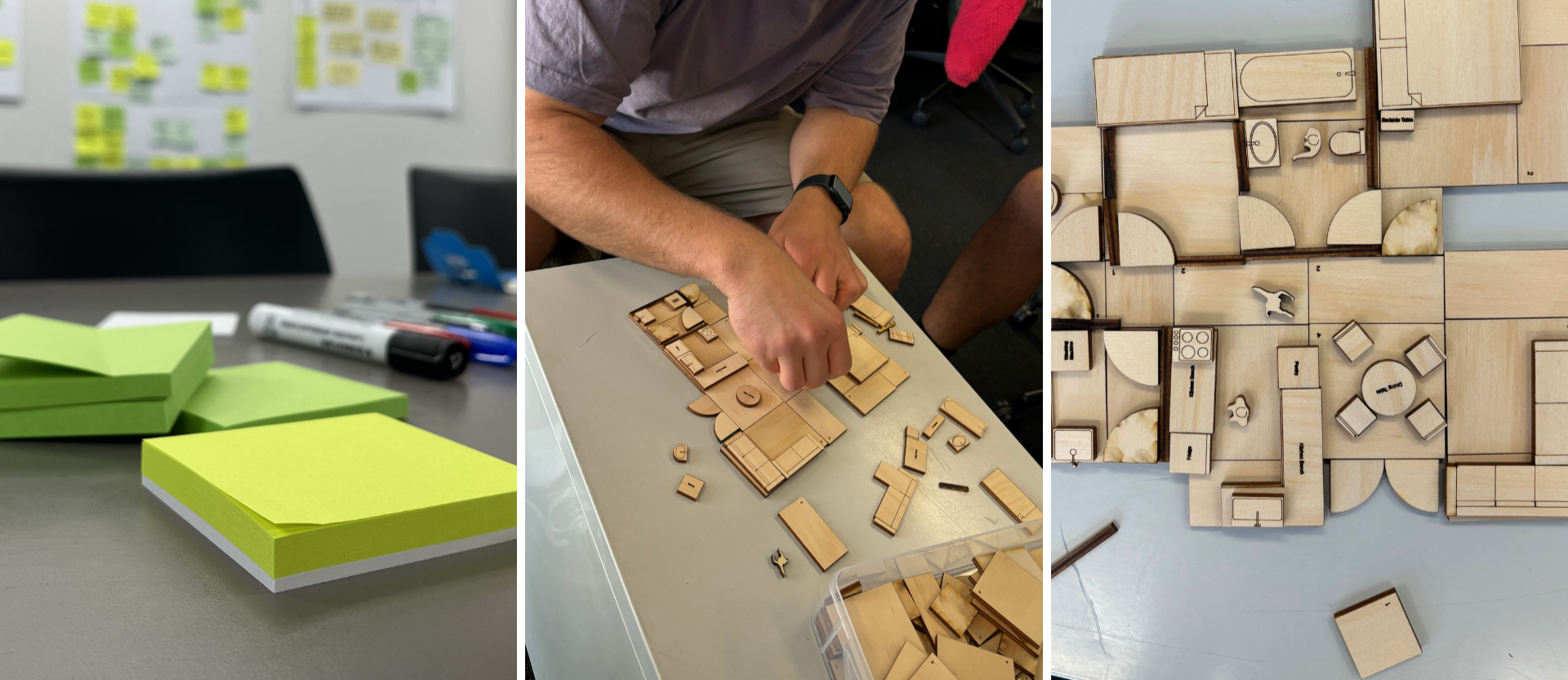
Examples of participatory design methods that could be aided by artificial intelligence. Photographs by Kisa Basabas & Dr James Berghan.
KAUPAPA (PURPOSE):
Architecture for all investigates how AI-enabled design tools can support—rather than replace—kaupapa Māori engagement and architectural expertise, widening whānau access to culturally grounded, bespoke home design.
PROJECT DESCRIPTION:
Most new homes in Aotearoa are built from standardised plans with limited opportunities for whānau to shape the design around their cultural, collective and intergenerational needs. Bespoke architectural services can be costly and difficult to access, particularly for whānau Māori already navigating systemic barriers within housing, land development and finance.
Architecture for all is an ongoing project that explores whether kaupapa Māori engagement methods and emerging artificial intelligence tools can work together to make whānau-centred design more accessible and affordable. The project recognises that cultural knowledge, relationships and professional judgement must remain central to the design process. AI is investigated as a supporting tool that may accelerate routine activities, visualise ideas and allow whānau to explore more options during the early stages of a project.
The first phase maps the residential design-to-build journey through literature review, interviews and wānanga with whānau, architects, designers and housing providers. This will identify points where AI might improve efficiency, alongside the stages where human relationships, cultural expertise and professional judgement cannot be replaced.
The project will then develop and pilot a toolkit integrated with AI-enabled design workflows. Testing will examine usability, cultural fit, ethical considerations and the tool’s potential to reduce the time and cost associated with early design exploration.
The research is grounded in kaupapa Māori principles, including manaakitanga, rangatiratanga, whanaungatanga and kaitiakitanga. Its wider aim is to strengthen whānau agency in housing design and contribute to homes that better support tikanga, collective living, accessibility, connections to whenua and changing intergenerational needs.
Findings will inform practical recommendations for architects, housing providers and policymakers. By bringing cultural intelligence and digital innovation together, the project seeks to demonstrate a more equitable pathway into high-quality architectural design while contributing to Indigenous-led thinking about AI in the built environment.
PROJECT DETAILS:
TYPE OF PROJECT:
Research project.
PROJECT LEAD:
Dr James Berghan.
TEAM MEMBERS:
Ben Siesicki, Amiria Kiddle, Dr Rebecca Kiddle.
PEOPLE INVOLVED:
TBC.
LOCATION:
Aotearoa - nationwide.
PARTNERS / ORGANISATIONS:
participating architecture, housing and community organisations to be confirmed.
FUNDER:
BRANZ, through the Building Research Levy.
PROJECT DATES:
2026 - Present.
LINK: